
What is lower blepharoplasty?
Lower blepharoplasty addresses under-eye bags, fat herniation, skin laxity, and contour irregularities to create a smoother, more refreshed lower eyelid appearance.
The under-eye area is among the first regions to show signs of aging. Fat herniation (under-eye puffiness), tear trough deformity (depression at the eye-cheek junction), and skin thickness changes can begin in the 30s. The modern blepharoplasty approach is not just to "remove" fat but to "reposition" it as needed for natural results.
Who is a candidate?
Candidates include patients with under-eye puffiness (fat herniation), dark circles and tear-trough hollowing, lower eyelid skin laxity, and contour irregularities at the cheek-eyelid junction.
Evaluation includes lower eyelid tone (snap-back test), tear-trough depth, skin quality, and lower eyelid position (ectropion risk). Thyroid disease, dry eye, and prior eyelid surgery are reviewed preoperatively.
Techniques
The incision can be placed just below the lash line (subciliary) or inside the eyelid (transconjunctival). Fat is repositioned or removed, and excess skin is addressed as needed.
Transconjunctival blepharoplasty: Incision inside the eyelid; no external scar. Used for younger patients with fat herniation only and no skin redundancy.
Subciliary blepharoplasty: Incision just below the lashes. Used for patients with both fat and skin redundancy. Scar concealed under lashes; near-invisible at 6-12 months.
Fat repositioning (transposition): In modern technique, under-eye fat is not entirely removed; instead it is repositioned into the tear-trough hollow. This approach yields more natural and longer-lasting results.
How is the surgery performed?
Performed under general anesthesia or local anesthesia plus sedation. Surgery takes 1-2 hours. Hospital stay is 1 night or same-day discharge. Cold compresses are used postoperatively to reduce swelling.
Preoperative preparation
Smoking should be stopped at least 4 weeks before surgery. Blood-thinning medications are stopped 10 days before surgery. Eye conditions are reviewed during consultation.
Recovery timeline
First week: Bruising and swelling around the eye. Cold compresses every hour for 48 hours. Office workers return at 7-10 days.
Weeks 2-3: Bruising fades, light makeup may be used. Social activities normal.
Months 1-3: Swelling fully resolves. Scar maturation begins.
Month 6: Final result. Scars become virtually invisible.
Risks and complications
Early-period: bleeding, infection, transient blurred vision, dry eye sensation.
Late-period: ectropion (lower eyelid eversion — rare with modern technique), asymmetry, under/over-resection of fat, scleral show. With experienced hands, complication rates are very low.
Lower blepharoplasty in Istanbul — Assoc. Prof. Dr. Ayhan Işık Erdal's practice
Dr. Erdal's private clinic is located in central Istanbul, in the Nisantasi district. Address: Teşvikiye Cad. No:9/12, Istanbul. The clinic is easily accessible from major Istanbul hotels and from Istanbul Airport (IST) and Sabiha Gökçen Airport (SAW).
Lower blepharoplasty is performed in a sensitive anatomical area and requires technical experience. International patient coordination includes video consultation prior to travel, airport-hotel transfer, English-speaking medical team, accommodation at partner hotels, and full postoperative follow-up. Patients typically stay in Istanbul for 7-10 days following lower blepharoplasty. WhatsApp consultations are available at +90 544 850 72 32 for international inquiries.
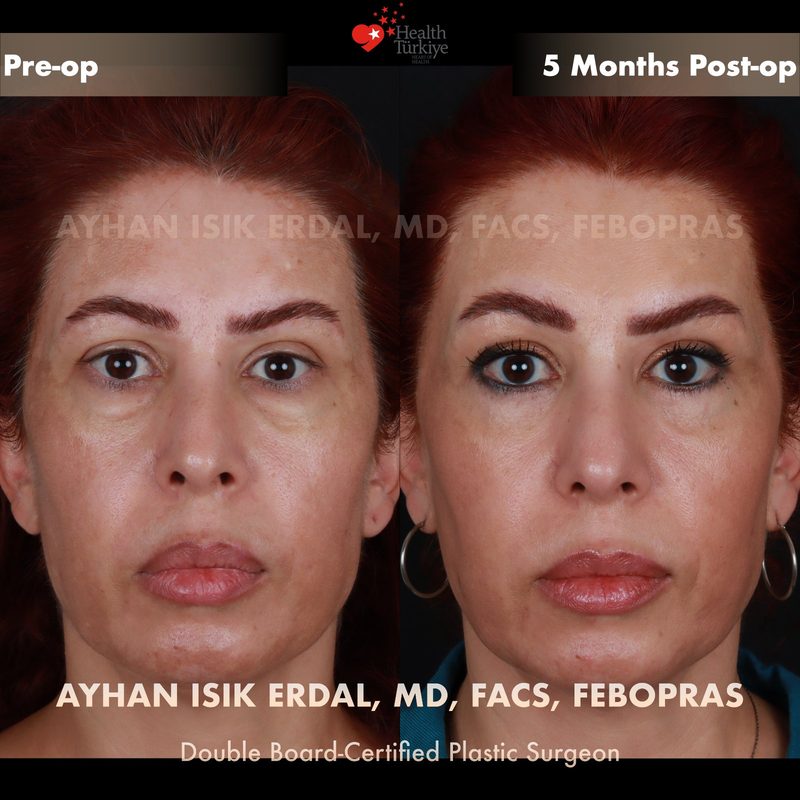
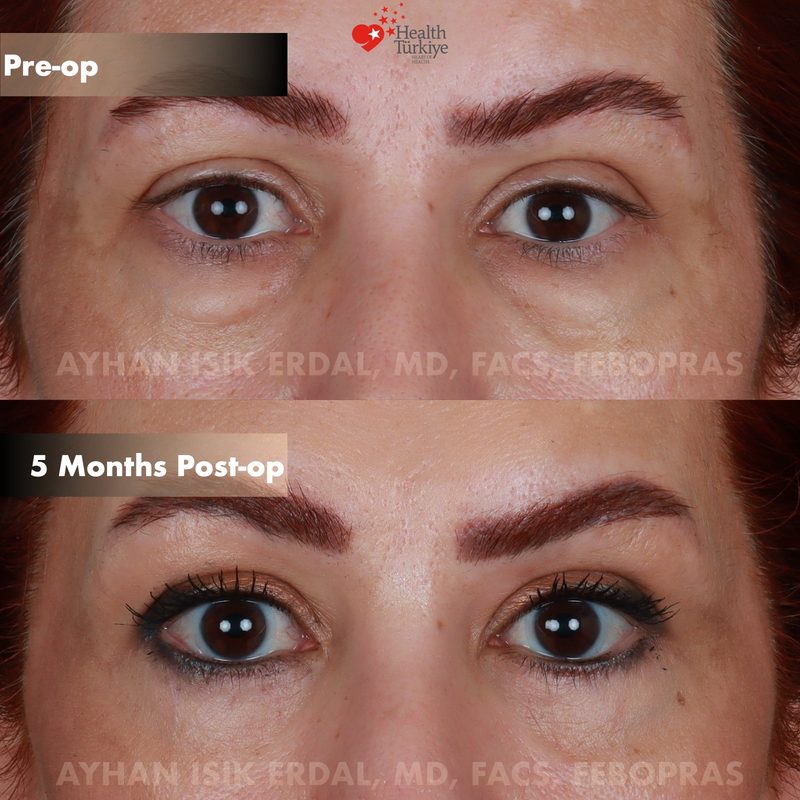
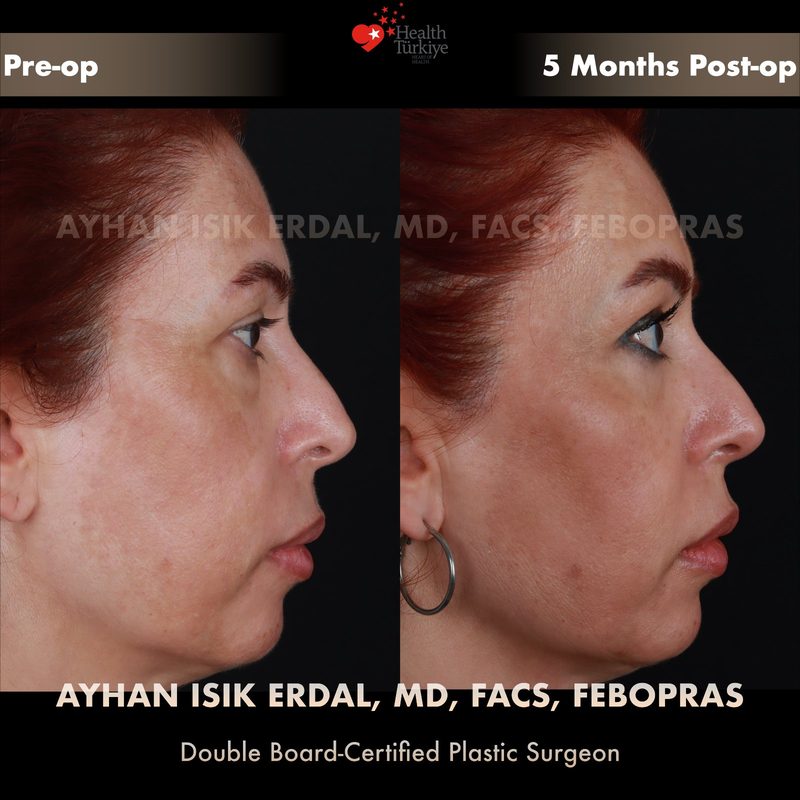
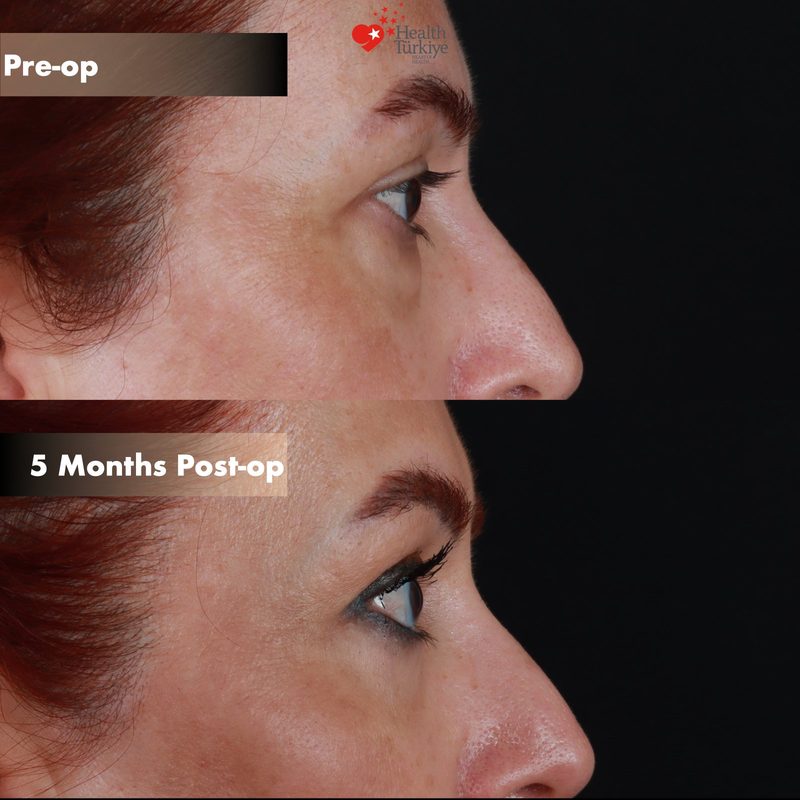
Before & After Gallery
Real patient results. Photos shared with patient consent. Individual results may vary.
Frequently Asked Questions
With transconjunctival approach, there is no external scar. External incisions result in a very fine line below the lashes that becomes nearly invisible.
Swelling resolves in 7-14 days. Results are well-established by 5 months.
Yes, corrected fat bags and contour improvements are long-lasting. Mild aging changes may occur over many years.
Bruising typically resolves within 7-14 days. Cold compresses during the first few days help minimize duration.
Mild hollowing may respond well to fillers. Significant fat bags, skin excess, or contour irregularities are better addressed surgically for a more comprehensive, permanent result.
Usually after 1-2 weeks. Your surgeon will provide specific timing based on your healing.
No. If only the lower eyelids are a concern, lower blepharoplasty alone is appropriate. When both areas need attention, combination is recommended.
With transconjunctival approach, there is no external scar at all. External incisions result in a very fine line below the lashes that becomes nearly invisible.
If dark circles are caused by fat herniation creating shadows, surgery can help. Pigmentation-based dark circles may require different treatments.
Light sunglasses within a few days. Heavier frames after 2-3 weeks.
Book a Consultation
For more information about Lower Blepharoplasty and to schedule a consultation, please get in touch.
WhatsApp